30.11.2025
A modernist retreat in the dunes of Sejerø Bay
Architectural Vision and Connection to the Landscape
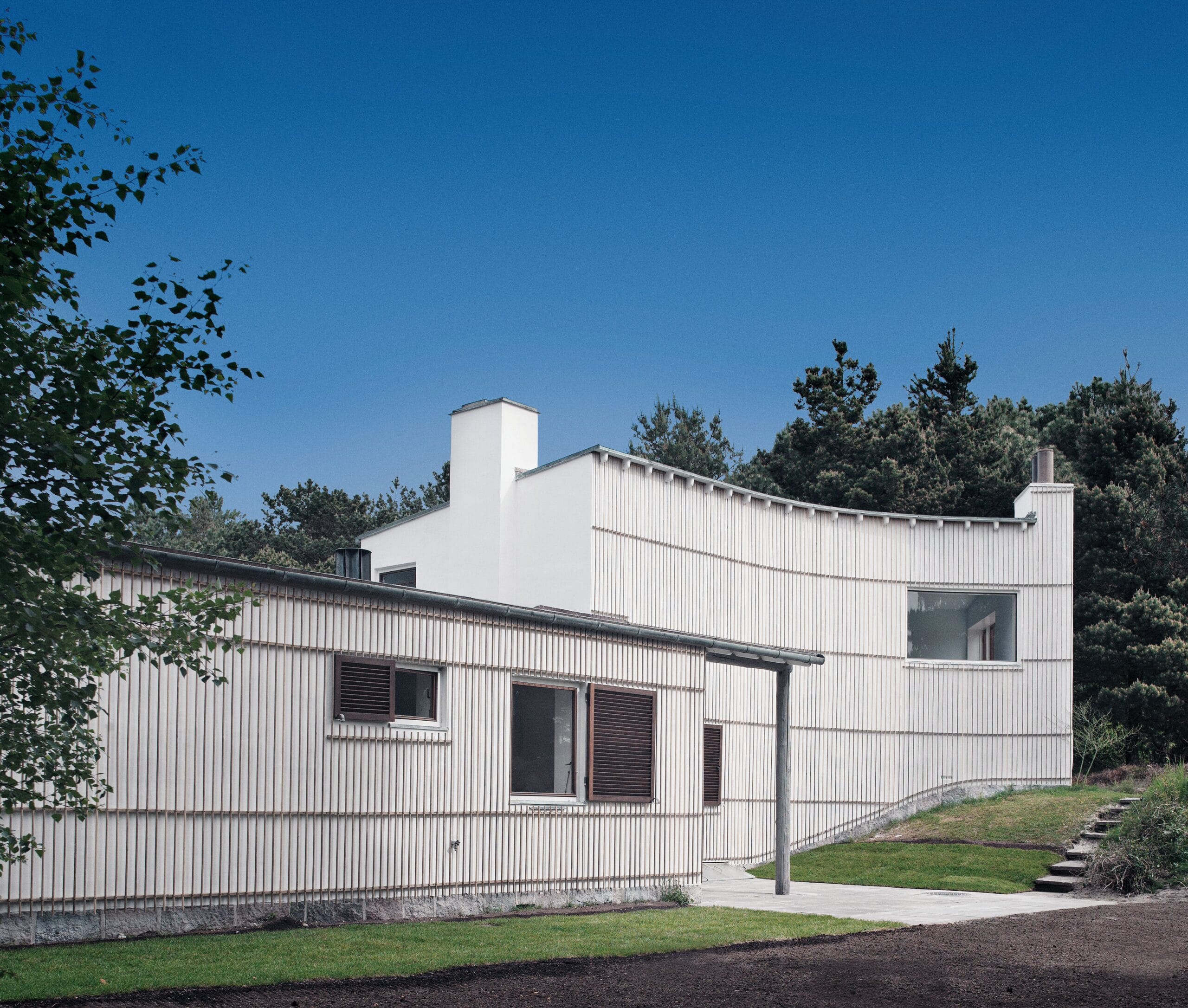
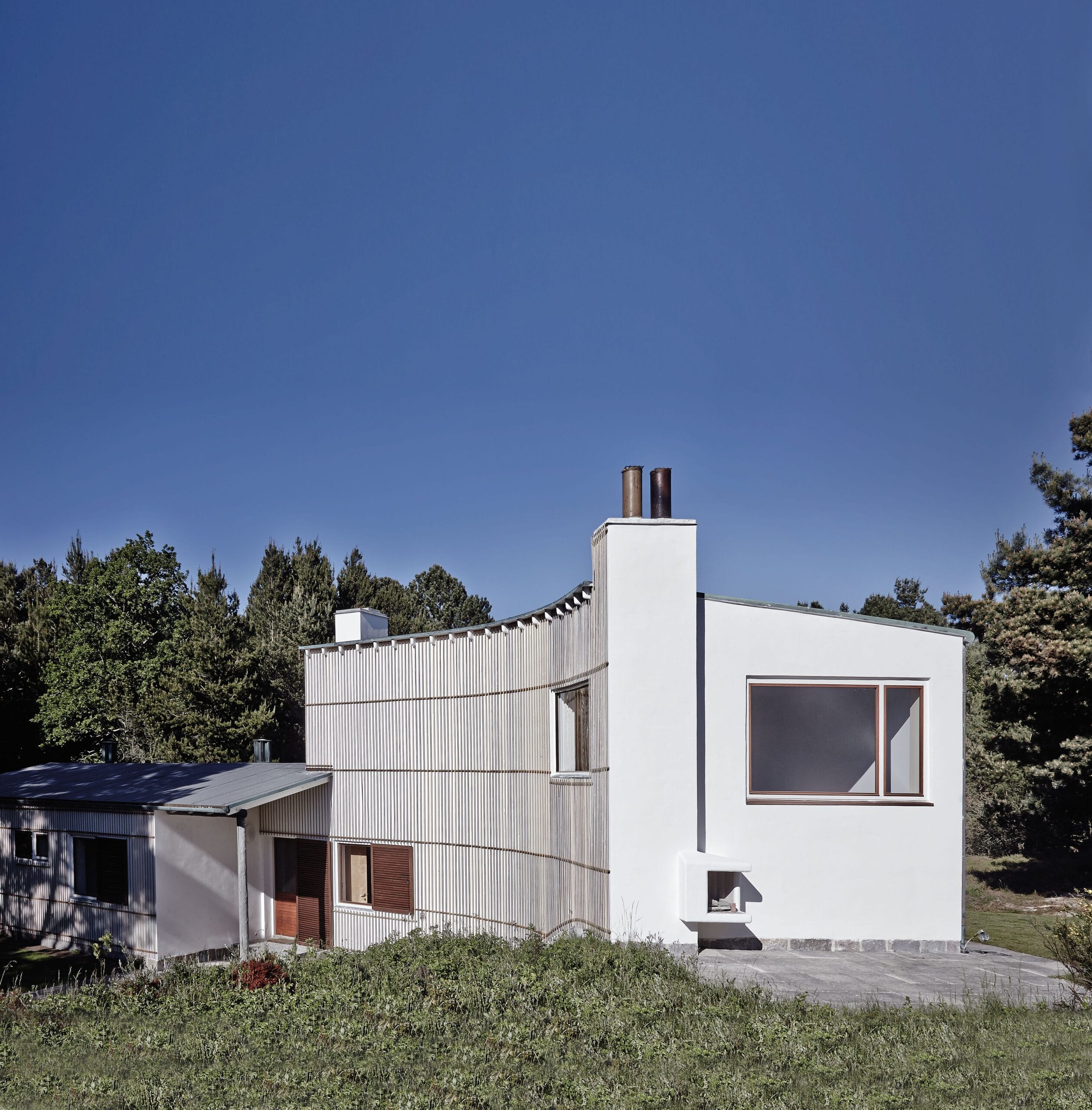
Completed in 1938 for Arne Jacobsen and his family, Knarken stands as a defining example of Nordic modernism in Danish residential architecture.
The house rests quietly in the dune landscape near Sejerø Bay, where its form follows the terrain and meets the surrounding nature with restraint and serenity. The sloping roof anchors the building into the landscape and opens toward the sheltered outdoor space. Along the whitewashed wall, Jacobsen allowed ivy to climb the espalier—creating a tactile transition between architecture and nature.
Its white rendered façades and simple volumes read as a modernist statement, yet Knarken is also an intimate work. It is architecture seeking harmony with nature—a study in how function, light, and landscape can be fused into a coherent whole.
Spatial Structure and Holistic Thinking
Inside, Knarken is organized around a central, double-height living space, where lounge area, dining zone, and a small “square” merge into one. The adjoining rooms are lower and more intimate—a deliberate contrast that creates rhythm and variation throughout the house.
The thoughtful plan generates a continuous dialogue between indoors and outdoors. From the eastern loggia to the western terrace, a natural axis unfolds, allowing light, air, and views to play an active role in shaping the experience of the space.
Knarken exemplifies Jacobsen’s total-design approach—architecture, interior, and furnishings conceived as one. Everything from window assemblies and door handles to built-in furniture was designed with the same meticulous attention.
Materials and Detailing
As in many of Jacobsen’s works, the material palette is defined by clarity and precision.
The façades are white rendered and unornamented, while the interior reveals warm natural materials such as teak, maple, and Douglas fir.
The clean lines and carefully balanced proportions create a calm framework for daily life—an expression of Nordic functionalism enriched with a human and poetic dimension.
Knarken stands today as an early demonstration of Jacobsen’s ability to join modernist principles with a sense of intimacy, craftsmanship, and the spirit of place.
A Place for Calm and Creative Work
For the Jacobsen family, Knarken was a retreat—yet for Arne Jacobsen, it also served as a workspace and source of inspiration.
Here he found the time to paint, draw, and study the forms of nature. His deep botanical interest was nourished by the dune landscape and its distinctive vegetation.
Knarken became a place where architecture and nature blended—a physical expression of Jacobsen’s search for balance between the rational and the poetic.
Preservation and Contemporary Use
Knarken was listed in 1985 and is today owned by Realdania By & Byg, which has restored the house with great respect for Jacobsen’s original ideas and materials.
The restoration has recreated the original surfaces and spatial qualities while updating the house to modern standards. Today, Knarken forms part of Realdania By & Byg’s collection of historic properties.
An Icon of the Danish Summer Landscape
Knarken marks a turning point in Arne Jacobsen’s career. Here, the architect and the individual converge in a work where form, function, and nature stand in complete balance.
It is not merely a summer house, but an early masterwork of Danish modernism—and a testament to an architect who understood that architecture is not only about space, but about life.
Sources
- Carsten Thau & Kjeld Vindum, Arne Jacobsen
• Realdania By & Byg – Arne Jacobsen’s summer house (project description and restoration material)
IMAGES:
Floor plan (source: Arne Jacobsen, Royal Danish Library collection)
Byg & Bo, Realdania
Arne Jacobsens summer house Knarken. Photo: Byg & Bo, Realdania